Monday, August 17, 2026

The Best Way You Could Help Octopuses (and all creatures)

Whilst the damage to cephalopod lives and all other creatures is a systemic issue, if you are able to reduce and eliminate animal product consumption you will lessen your contribution to the abuse and exploitation of animals and their homes. It is important to understand that discomfort is normal when facing these issues as it can be difficult to accept that our actions are actively harming our environment. Any major social change causes discomfort as people must confront how their morals align with their actions. The difficult truth is that you can believe you are against exploitation and still partake in it with financial contribution. 

This post will touch on the role of animal industry in climate change, living conditions of industry animals and how this links to cephalopods. 

Plant-based diets have origins in ancient Greece with Pythagoreans and in India with ahimsā in Jainism, Buddhism and Hinduism [1]. Ahimsā is a principle of non-violence and peaceful living acknowledging that all animals and their homes should be treated with respect. There isn’t a respectful or ethical way to kill or abuse an animal that doesn’t want to be killed or abused. There isn’t a respectful or ethical way to destroy an animal’s home. Veganism is an ethical principle built from ahimsā and other concepts over time to minimise harm to animals and their habitats by not viewing animals as a commodity. 


Data from https://ourworldindata.org/drivers-of-deforestation#cutting-down-forests-what-are-the-drivers-of-deforestation 

The animal industry clear land by deforestation to use for livestock or their feed which usually happens through burning, trapping native animals in fire and also releasing years of CO2 storage from plants. Mature plants and trees, whilst alive, act as carbon sinks to mitigate some of our impact from greenhouse gas emissions. Although the greenhouse effect is a natural process, humans are rapidly accelerating it with industries like animal agriculture, oil and gas [2].


A digestible method of describing how CO2 impacts climate change can be found here.  

As you can see in the data above, ocean temperature and CO2 concentration is correlated. A study found heat stress in octopuses could result in impaired eyesight and increased deaths of pregnant mothers and their unborn young [3]. Additionally, sustained rise in temperature can lead to circulatory, respiratory and reproduction issues in female Octopus maya [4]

Increased CO2 concentration in the atmosphere leads to acidification of the ocean, too. CO2 dissolves into oceans causing carbonic acid production. It may be leading to increased hatching time of squid which lengthens the time they are vulnerable to prey. On top of this, changes in shape and structure of aragonite statoliths (a part of cephalopods that help balance and movement) were noticed and predicted to effect survival [5].  

When discussing the impact of the animal industry on our loved marine creatures, trawling must be mentioned. Large nets are dragged through the ocean usually for tuna and salmon. Nets are indiscriminate. Seabirds, turtles, seals and more are caught in nets and murdered through crushing under the weight of the catch, infections from lacerations after becoming entangled, hypothermia after the catch are submerged in ice and hypoxia that can take up to half an hour to kill. 

Fish farms are not a better alternative. Firstly, many farmed fish such as salmon require feed from trawling (e.g. anchovies). Second, fish are so densely packed into sea cages that they swim in their own excrement leading to disease and death. 

This is not an extensive list of the harms that animal agriculture cause to animals and their habitats. If you are able to lead a more plant-based life style, then you have to ask why that is not being done. A full range of nutrients on a plant-based diet are now available to many people, with increasing accessibility to supermarkets and many animal product alternatives. 

For example, a tofu-based mince meat alternative costs only £1 from Asda. Vegetables, beans, rice and lentils packed with protein and fibre are cheaper than meat products. Many foods are already ‘accidentally’ vegan. Nutritional yeast with B12 can supplement the B12 from bacteria on meat. Algae supplements can replace Omega 3s from fish (which have these due to eating algae). There are many ways a plant-based lifestyle can be healthy and cost effective but you must do your own research and consult a doctor if necessary. 

I do enjoy a burger and can do so on a plant-based diet and have it taste no differently :)


References

1. Bowen, Paul (1998). Themes and Issues in Hinduism. Cassell. p. 102. ISBN 978-0-304-33850-4. vegetarianism and non - violence ( ahimsā ) developed under the influence of Buddhism and Jainism.


Date Published: 17th August 2026

Tuesday, March 17, 2026

Octopus Sightings in the UK on the Rise

Warmer sea temperatures around the UK are perhaps contributing to an increase in common octopus migration towards the south-west shores where sea temperatures were, on average, 4°C than the previous year. 

Fishing businesses worry about how this will affect shellfish population, with some predicting that octopuses could become "permanent residents". 

Please follow this link to BBC article to find out more. 

Date: 17th March 2026

Sunday, November 10, 2024

Octopuses and Fish Hunt Prey Together

Octopuses are described as the "brains of the operation" as they team with fish such as long-barbel goatfish, yellow goldsaddle goatfish and blacktip grouper. This is fascinating because octopuses normally work alone.

https://www.nature.com/articles/s41559-024-02525-2

Of course, being octopuses, they're not only the brains, but the muscle (they punch the prey too).

Click this link to be taken to the news article from nature.com.

Click the caption to be taken to the research article from September 2024.


Monday, August 19, 2024

Octopuses Could Lose Their Eyesight due to Climate Change


While previous research has suggested octopuses are highly adaptable, the latest research found heat stress from global warming could result in impaired eyesight and increased deaths of pregnant mothers and their unborn young.

Researchers exposed unborn octopuses and their mothers to three different temperatures: a control of 19C, 22C to mimic current summer temperatures, and 25C to match projected possible summer temperatures in 2100.

Octopuses exposed to 25C were found to produce significantly fewer proteins responsible for vision than those at other temperatures.

Click here to find out more!


Article from The Gaurdian

Saturday, April 27, 2024

Cuttlefish Use Ink for Unexpected Purposes


Cuttlefish, a Cephalopod closely related to octopus, have been found using ink as part of a courtship ritual. 

Ink disperses in the water to form a dark background which makes the male cuttlefish appear brighter and more colourful for stronger appeal to females. This information was first published by Arata Nakayama at the University of Tokyo in February of this year. 

Click here to find out more.

Monday, April 22, 2024

50 New Deep-sea Species have been Discovered

At least 50 new deep-sea species have been discovered between Easter Island and Chile during a 40 day exploration with more expected to be found after further laboratory testing. 

This includes a type of 'wrinkle coral' that is the deepest residing photosynthesis-dependent animal. Coral can't photosynthesise, but has a symbiotic relationship with algae called zooxanthellae. 

Click here to find out more. 


Sunday, July 30, 2023

Octopus in the Media

My Octopus Teacher (2020)  


A heart-warming Netflix documentary on a diver who develops a friendship with an octopus.

Blue Planet II (2017)


Episode 2 features octopuses that use shells for protection from predators. The other episodes are well worth a watch. (Available on BBC iPlayer).

Octopus, Squid & Cuttlefish: A Visual Scientific Guide to the Ocean's Most Advanced Invertebrates (2018)


An amazing book all about cephalopods. It's very good for explaining anatomy and evolution. I found it in my college library so check at your local one to find it! If it's not there it's also available to buy online. 

Other Minds: The Octopus and The Evolution of Intelligent Life (2016) 


A philosophical and evolutionary exploration of intelligence and consciousness.
I have yet to read it but come across it at the natural history museum. It's available in some local libraries and to buy online. 

Online Influencers: 

Here's some influencers who make enjoyable content about octopuses.

Ahmad Abdella|The Reef Doc

Ahmad posts great content about his rescued octopuses, including byrdie - a Californian two spot octopus.
He's very willing to share some facts so message him on Instagram if you have any questions! 


Meg|Octopus Biologist

She makes content on TikTok all about cephalopods! It's very informative and fun to watch. 
She also sells cephalopod stickers on her Instagram and is a talented photographer!


Sarah-Jane Beacher|The Sea Potter 

A skilled artist and biologist who creates all things ocean related... including octopuses! She often uses sea glass to create her beautiful artwork. 
Go and have a look at her website!


Monday, July 17, 2023

Octopus is saved!

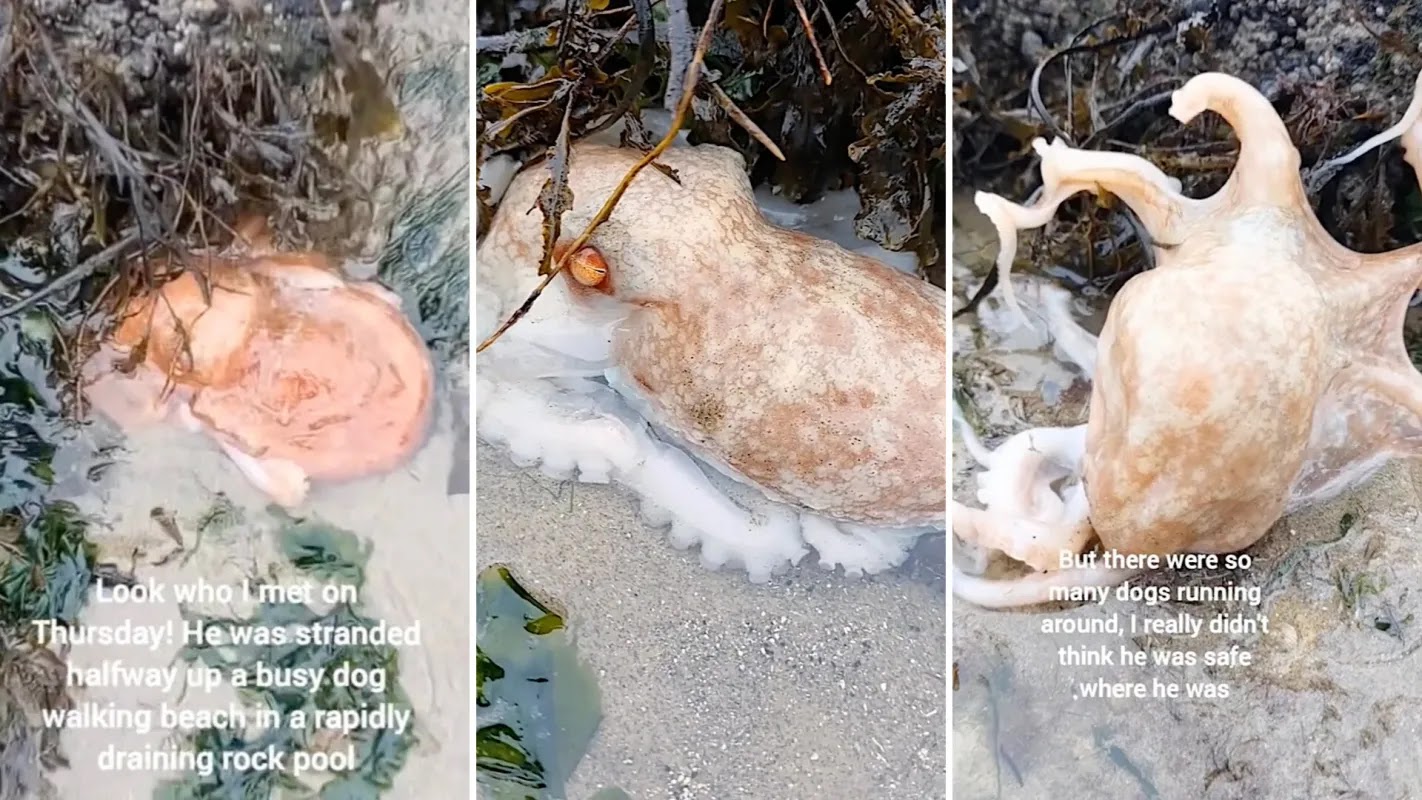
An octopus was saved by a 10 year old girl. Click here to read more. 

Friday, July 14, 2023

Recent News On Feeding Habits

 Recent News:

A new octopus feeding habit has been revealed! 


Please click here to find out more. 


Thursday, July 13, 2023

About the Author and Their Love For Octopods

Hi! I'm Finch.

Octopuses are amazing :] 

I would like that to be your opinion, too, which is why I'm collecting all the information I’ve ever learned on these alien-like creatures and putting it on a website. They’re one of the most understudied beings on Earth so finding new facts about them after reading so many websites and watching a borderline insane number of documentaries is very exciting. This blog contains lots of Google’s facts on octopuses, and any random pieces of information I could get my hands on. 

Please note that this site is a work in progress, and will be updated in my free time. I'm also not a professional and my biology knowledge is A Level standard at the moment, so if there is any information you believe to be incorrect, please let me know.

All information gathered on this blog is not my own (since I'm a Sixth-form student, and NOT a professional)!!! If you would like to see my main references they will be at the bottom of each page. There will also be a "Questions to be answered" section on the majority of posts and these are ideas I wish to look into in the future, but can't find resources on currently. If you have any questions or answers to any of mine, feel free to comment or fill out the contact form in the sidebar! 

Press the three lines in the corner to find the facts.

Hope you enjoy exploring my blog and thanks for reading!